Asphalt Mixing Plant Explained: Plant Types, Production Technologies, Manufacturing Processes, Global Manufacturers, Suppliers and Road Construction Applications
An asphalt mixing plant is an industrial production facility used to manufacture asphalt mixtures for highways, roads, airport runways, parking areas, bridges, and other infrastructure projects. It combines aggregates, bitumen, mineral filler, and selected additives under controlled heating and mixing conditions. Asphalt mixing plants play an important role in construction material production because pavement performance depends on the quality, composition, and consistency of the manufactured mixture.
The asphalt production industry includes several plant configurations, such as batch mix plants, drum mix plants, stationary systems, mobile plants, and recycling-integrated production facilities. Equipment manufacturers develop these systems with different production capacities, drying technologies, mixing arrangements, automated controls, and environmental management components. Construction contractors and asphalt producers evaluate these technologies according to project requirements, production volumes, material availability, and operating conditions.
This guide explains asphalt mixing plant types, industrial components, manufacturing processes, production technologies, global manufacturers, suppliers, and road construction applications. It also examines automation systems, recycled asphalt technologies, environmental considerations, commercial equipment categories, and important factors involved in evaluating asphalt production machinery.
Understanding Asphalt Mixing Plants
An asphalt mixing plant is a combination of mechanical, electrical, thermal, and automated equipment designed to manufacture asphalt mixtures. Its primary function is to heat and dry aggregates, combine them with bitumen and mineral filler, and produce a homogeneous material suitable for pavement construction.
The main raw materials include coarse aggregates, fine aggregates, mineral filler, and asphalt binder. Depending on the pavement specification, manufacturers may also incorporate polymers, fibres, anti-stripping agents, and recycled asphalt pavement (RAP).
The finished mixture must meet the required aggregate grading, binder content, temperature, and performance specifications. These requirements are established through pavement mix design and applicable engineering standards.
Main Types of Asphalt Mixing Plants
Asphalt production equipment is available in different configurations to support road construction projects, commercial asphalt manufacturing, and infrastructure development.
Batch Mix Asphalt Plants
Batch mix asphalt plants manufacture asphalt in separate production batches. Aggregates are dried, heated, and screened into different size categories before being transferred into individual hot storage bins.
The required quantities of aggregates, bitumen, and mineral filler are weighed separately and transferred into a pugmill mixer. Each batch follows a specified formulation before the finished material is discharged.
Important characteristics include:
Individual weighing of production materials.
Controlled aggregate grading.
Flexible adjustment of asphalt formulations.
Separate monitoring of production batches.
Suitability for projects requiring different mixture specifications.
Batch plants are commonly used in highway construction, airport pavement development, urban road projects, and commercial asphalt production.
Drum Mix Asphalt Plants
Drum mix asphalt plants use a continuous production process. Aggregates enter a rotating drum, where they are dried and heated before being combined with bitumen.
Unlike conventional batch plants, drum mix systems generally do not require separate hot aggregate screening and individual batch weighing. Material proportions are controlled through continuous feeding and metering systems.
These plants are suitable for projects requiring sustained asphalt production and relatively consistent mixture formulations.
Stationary Asphalt Mixing Plants
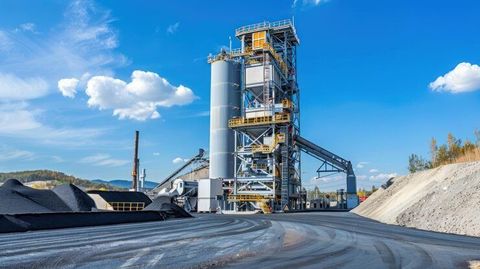
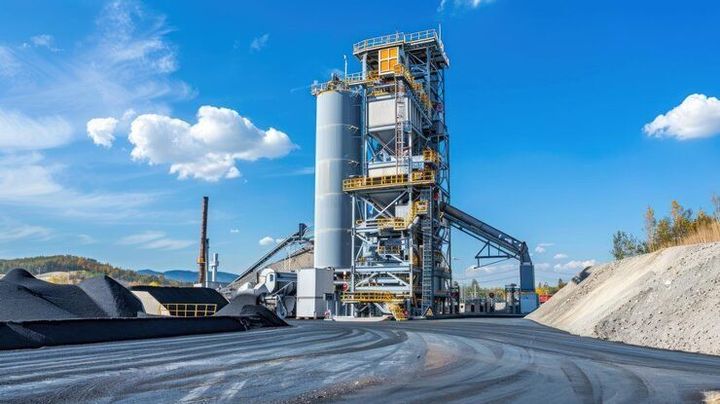
Stationary asphalt plants are designed for permanent or long-term installation at centralized production facilities. They generally incorporate aggregate storage bins, conveyors, drying drums, burners, mixing equipment, dust collection systems, and finished asphalt storage silos.
These installations are frequently used by infrastructure contractors, commercial asphalt producers, and road construction companies operating across multiple projects.
Mobile and Portable Asphalt Plants
Mobile asphalt mixing plants are designed for transportation between construction locations. Their modular equipment arrangements allow installation at temporary production sites or remote infrastructure projects.
Portable systems may include compact aggregate feeders, drying drums, mixing units, control cabins, bitumen tanks, and supporting conveyors.
They are particularly relevant when transporting finished asphalt over long distances creates logistical difficulties.
Asphalt Mixing Plant Types Comparison
| Plant type | Production method | Main applications |
|---|---|---|
| Batch mix plant | Individual material batches | Highways and varied asphalt formulations |
| Drum mix plant | Continuous production | Large road construction projects |
| Stationary plant | Permanent installation | Centralized asphalt manufacturing |
| Mobile plant | Transportable installation | Remote and temporary projects |
| Recycling plant | Production using reclaimed asphalt | Road rehabilitation and pavement recycling |
Asphalt Mixing Plant Manufacturing Process
Asphalt manufacturing involves several connected operations. Each stage influences material quality, production consistency, and overall plant performance.
Aggregate Storage and Cold Feeding
Different aggregate sizes are stored in separate cold-feed bins. These bins supply controlled quantities of materials to conveyor systems that transport aggregates toward the drying equipment.
Variable-speed feeders regulate material flow according to the required mix design. Accurate feeding helps maintain the intended aggregate proportions throughout production.
Aggregate Drying and Heating
Aggregates contain moisture that must be removed before mixing. A rotary drying drum uses a burner and controlled airflow to heat the materials and reduce moisture content.
The burner may operate using suitable liquid or gaseous fuels, depending on the plant configuration. Drying efficiency depends on aggregate moisture, material flow, burner performance, and operating conditions.
Screening and Material Separation
In batch mix plants, heated aggregates pass through vibrating screening equipment. Screens separate materials into different size fractions, which are temporarily stored in hot aggregate bins.
This arrangement allows operators to control the proportions of coarse and fine aggregates during individual production batches.
Bitumen Heating and Mixing
Bitumen is stored in insulated tanks and heated to maintain suitable handling and pumping characteristics. Metering systems regulate its delivery into the mixing equipment.
In batch plants, heated aggregates and bitumen are combined in a pugmill mixer. In continuous plants, mixing generally occurs within the rotating drum or a separate continuous mixing unit.
Finished Asphalt Storage and Transportation
After mixing, finished asphalt is transferred through conveyors into insulated storage silos or directly into transport vehicles.
Storage arrangements help manage production and transportation schedules while maintaining suitable material temperature before paving operations.
Major Components and Technologies Used in Asphalt Plants
Modern asphalt mixing plant equipment consists of several integrated systems.
Aggregate feeders: Control the supply and proportions of raw aggregates.
Rotary drying drum: Removes moisture and heats aggregates.
Industrial burner: Supplies the thermal energy required for drying.
Vibrating screens: Separate heated aggregates according to particle size.
Bitumen storage tanks: Maintain binder storage and heating conditions.
Pugmill mixer: Blends aggregates, bitumen, and filler in batch systems.
Conveyor systems: Transfer raw materials and finished asphalt.
Baghouse dust collectors: Capture airborne particles generated during production.
Control cabins: Coordinate plant operations and monitor production information.
Storage silos: Temporarily hold finished asphalt before transportation.
Automation technologies connect these components through programmable controllers, sensors, load cells, temperature monitoring equipment, and production management software.
Global Asphalt Mixing Plant Manufacturers and Suppliers
The international asphalt mixing equipment market includes established industrial machinery manufacturers, specialized road construction equipment companies, and regional production system suppliers.
Recognized manufacturers operating in this industry include:
Ammann Group: Develops batch and continuous asphalt mixing plants, recycling technologies, automated controls, and supporting equipment.
Benninghoven: A Wirtgen Group brand specializing in asphalt mixing technology, thermal systems, and recycling-integrated production equipment.
Astec Industries: Supplies asphalt production equipment, drying systems, burners, material handling equipment, and related road construction technologies.
Marini: An asphalt plant manufacturer associated with batch production, continuous mixing, and transportable plant configurations.
Nikko Company: Develops asphalt mixing plants and related equipment for road construction and infrastructure applications.
Lintec & Linnhoff: Supplies asphalt mixing technologies, including modular and containerized plant configurations.
Gencor Industries: Manufactures asphalt production equipment, thermal systems, and related industrial components.
Parker Plant: Supplies asphalt production and construction material processing equipment.
The supplier market also includes regional equipment manufacturers, plant component suppliers, engineering contractors, installation companies, and replacement-parts distributors.
When comparing asphalt plant manufacturers and industrial suppliers, businesses generally examine equipment specifications, production capacity, automation capabilities, technical documentation, component availability, installation arrangements, and after-sales support.
Industry Developments and Production Trends During 2024–2026
Asphalt manufacturing technologies continue to evolve in response to infrastructure requirements, environmental considerations, and industrial automation.
Recycled Asphalt Pavement Technologies
Recycled asphalt pavement systems allow reclaimed road materials to be incorporated into new asphalt mixtures. Specialized feeding, heating, and mixing arrangements help process reclaimed material while managing temperature and emissions.
RAP integration can reduce the requirement for virgin aggregates and new bitumen, depending on the mixture design and recycling configuration.
Warm Mix Asphalt Technology
Warm mix asphalt technologies allow asphalt mixtures to be produced and placed at lower temperatures than conventional hot mix processes. Different approaches use chemical additives, foaming systems, or other production techniques to improve workability.
Industrial Automation and Digital Monitoring
Modern plants increasingly incorporate automated production controls, electronic material weighing, temperature sensors, digital reporting, and equipment monitoring systems.
These technologies help operators monitor material proportions, production conditions, equipment performance, and operational interruptions.
Energy Efficiency and Emission Management
Manufacturers are developing improved burner arrangements, heat transfer systems, variable-speed drives, and dust collection technologies.
These developments focus on fuel management, particulate control, energy consumption, and environmental performance.
Regulations and Quality Standards for Asphalt Production
Asphalt mixing plants must operate according to applicable industrial, environmental, workplace safety, and construction material requirements.
In India, relevant regulatory frameworks include the Environment (Protection) Act, 1986, applicable air pollution control requirements, and environmental consent conditions administered by the appropriate State Pollution Control Board.
The Central Pollution Control Board and state authorities provide environmental guidance and requirements relating to industrial emissions and pollution management. Applicable conditions depend on the plant location, operating configuration, and regulatory classification.
For asphalt mixture quality, commonly referenced international standards include the EN 13108 series for bituminous mixtures and ASTM specifications relevant to asphalt materials and testing.
In India, road construction projects also follow applicable Indian Roads Congress specifications, Ministry of Road Transport and Highways requirements, and project-specific technical conditions.
Important Factors When Evaluating Asphalt Mixing Equipment
Selecting an industrial asphalt mixing plant involves evaluating technical, operational, and commercial requirements.
Production capacity: Assess hourly output requirements according to project schedules and expected material demand.
Plant configuration: Compare batch, continuous, stationary, and mobile systems according to production flexibility and installation requirements.
Fuel and energy requirements: Examine burner compatibility, fuel consumption, heating efficiency, and electrical power requirements.
Automation and controls: Evaluate weighing accuracy, production monitoring, software functionality, and operator requirements.
Environmental equipment: Review dust collection, exhaust management, noise control, and recycling capabilities.
Maintenance and replacement parts: Examine component durability, maintenance intervals, spare-parts availability, and technical support arrangements.
Commercial considerations: Evaluate equipment quotations, transportation, installation, commissioning, operating expenses, financing arrangements, and long-term maintenance requirements.
Road Construction Applications of Asphalt Mixing Plants
Asphalt mixing plants support different infrastructure and transportation applications.
Highway construction: Manufacturing asphalt mixtures for base, binder, and surface pavement layers.
Urban road development: Producing asphalt for municipal roads, residential streets, and commercial areas.
Airport construction: Supplying specified asphalt mixtures for airport pavements and related infrastructure.
Bridge approaches: Manufacturing pavement materials for connecting roads and approach sections.
Parking infrastructure: Producing asphalt mixtures for commercial, industrial, and public parking areas.
Road rehabilitation: Incorporating reclaimed asphalt into pavement reconstruction and resurfacing projects.
The required mixture composition depends on traffic loading, climate, pavement design, aggregate characteristics, and engineering specifications.
Frequently Asked Questions
What is an asphalt mixing plant used for?
An asphalt mixing plant manufactures asphalt mixtures by combining heated aggregates, bitumen, mineral filler, and selected additives. The finished material is primarily used for highways, roads, airport pavements, parking areas, and infrastructure development.
What is the difference between batch mix and drum mix asphalt plants?
Batch mix plants produce asphalt in separate batches using individual material weighing and pugmill mixing. Drum mix plants use continuous material feeding and mixing arrangements, making them suitable for sustained production requirements.
What are the major components of an asphalt mixing plant?
Major components include aggregate feeders, rotary dryers, industrial burners, vibrating screens, bitumen tanks, mixing equipment, conveyors, dust collectors, automated controls, and finished asphalt storage silos.
Which factors influence asphalt mixing plant production capacity?
Production capacity depends on plant configuration, aggregate moisture, burner performance, mixing system design, material feeding rates, and operational conditions. Actual output may differ from the manufacturer's stated nominal capacity.
Can asphalt mixing plants use recycled materials?
Yes. Specialized asphalt recycling systems incorporate reclaimed asphalt pavement into new mixtures. The achievable recycling proportion depends on plant configuration, material properties, heating arrangements, mix design, and applicable project specifications.
Conclusion
Asphalt mixing plants are essential industrial systems for producing pavement materials used in road construction, highways, airports, and infrastructure development. Batch, continuous, stationary, mobile, and recycling-integrated plants provide different production arrangements for construction contractors and commercial asphalt manufacturers. Automation, energy management, warm mix technologies, and reclaimed asphalt processing continue to influence equipment development. Understanding production processes, plant components, manufacturers, environmental requirements, and commercial evaluation factors helps businesses assess suitable asphalt manufacturing technologies.