Linear Actuator Manufacturing Explained: Types, Technologies, Manufacturing Processes, Global Manufacturers, Suppliers and Industrial Applications
Linear actuators are mechanical and electromechanical devices designed to produce controlled movement in a straight line. They are used to push, pull, lift, lower, tilt, and position components in industrial machinery, automation systems, medical equipment, automotive applications, and material handling operations. Linear actuator manufacturing involves mechanical engineering, motor technology, precision machining, electronic controls, and specialized assembly processes.
The development of industrial automation has increased the importance of linear motion technologies across manufacturing and engineering sectors. Traditional mechanical and fluid-powered actuators are used alongside modern electric systems that incorporate servo motors, position sensors, feedback controls, and programmable motion technologies. Manufacturers develop different actuator configurations to accommodate variations in load capacity, stroke length, operating speed, accuracy, and environmental conditions.
Understanding linear actuator types, manufacturing processes, drive mechanisms, industrial technologies, and global equipment manufacturers is important when evaluating motion control systems. This article explores electric, hydraulic, pneumatic, and mechanical actuators, component manufacturing, production methods, automation technologies, international manufacturers, supplier categories, industrial applications, and important equipment selection considerations.
Understanding Linear Actuators and Their Industrial Importance
A linear actuator is a mechanical device that converts electrical, hydraulic, pneumatic, or mechanical energy into straight-line movement. Unlike rotary motors, which produce rotational motion, linear actuators generate movement along a defined axis.
These devices are important in industrial machinery because many production operations require controlled positioning, repetitive movement, lifting, clamping, and material transfer. Their operating characteristics depend on the drive mechanism, actuator construction, control system, and application requirements.
A typical electromechanical linear actuator consists of an electric motor, gearbox, lead screw or ball screw, drive nut, housing, bearings, and position-control components. Hydraulic and pneumatic versions use pressurized fluids or compressed air to generate linear movement.
Linear actuators are commonly used in:
Industrial automation and robotic manufacturing.
Automotive assembly and vehicle positioning systems.
Packaging and material handling machinery.
Medical beds and patient positioning equipment.
Agricultural machinery and equipment adjustment systems.
Aerospace and specialized engineering equipment.
Renewable energy tracking and positioning systems.
Main Types of Linear Actuators
Linear actuators are classified according to their power source, internal drive mechanism, and operating characteristics.
Electric Linear Actuators
Electric linear actuators use electric motors to generate controlled linear movement. A motor generally drives a lead screw, ball screw, belt mechanism, or another transmission system to convert rotary movement into straight-line displacement.
These actuators are widely used in automated manufacturing, robotics, medical equipment, and precision positioning systems.
Important characteristics include programmable movement, adjustable speed, position feedback, and integration with programmable logic controllers (PLCs). Some advanced configurations incorporate servo motors, encoders, and integrated motion controllers.
Hydraulic Linear Actuators
Hydraulic linear actuators use pressurized hydraulic fluid to move a piston inside a cylinder. They are suitable for applications requiring substantial force and heavy-load movement.
Common applications include construction machinery, industrial presses, lifting equipment, agricultural machinery, and heavy manufacturing systems.
Hydraulic actuator assemblies generally include cylinders, pistons, seals, rods, hydraulic connections, and pressure-control components. Regular inspection of fluid condition, sealing systems, and operating pressure is important for maintaining equipment reliability.
Pneumatic Linear Actuators
Pneumatic actuators use compressed air to produce linear movement. They commonly consist of a cylinder, piston, piston rod, seals, and air connections.
These systems are used in packaging machinery, assembly equipment, automated sorting systems, and material handling operations.
Pneumatic actuators are suitable for repetitive movement and relatively simple positioning tasks. Their performance depends on air pressure, cylinder dimensions, load conditions, and airflow regulation.
Mechanical Linear Actuators
Mechanical actuators generate linear movement through mechanical transmission components such as screws, gears, rack-and-pinion mechanisms, and linkages.
Screw-driven actuators are commonly used in lifting systems, machine tools, adjustable platforms, and industrial positioning equipment.
Their operating characteristics depend on screw geometry, transmission efficiency, mechanical load, lubrication, and material selection.
Telescopic and Rodless Linear Actuators
Telescopic actuators contain multiple extending sections that provide longer travel distances within a relatively compact retracted length. They are used in lifting platforms, vehicle equipment, industrial machinery, and specialized positioning applications.
Rodless actuators generate movement through a carriage that travels along a cylinder or enclosed guide structure. They are commonly used in automated production lines, packaging equipment, and material transfer systems where installation space is limited.
Comparison of Linear Actuator Technologies
| Actuator type | Operating mechanism | Common applications |
|---|---|---|
| Electric | Motor and screw or belt drive | Robotics and precision automation |
| Hydraulic | Pressurized hydraulic fluid | Heavy machinery and industrial presses |
| Pneumatic | Compressed air | Packaging and assembly systems |
| Mechanical | Screws, gears, and linkages | Lifting and positioning equipment |
| Telescopic | Multiple extending sections | Lifting platforms and vehicle equipment |
| Rodless | Guided carriage movement | Automated material handling |
Linear Actuator Manufacturing Processes
Manufacturing linear actuators involves several production stages. The exact manufacturing sequence depends on actuator design, operating capacity, material specifications, and intended industrial application.
Raw Material Selection and Component Preparation
Manufacturers select materials according to mechanical strength, durability, corrosion resistance, weight, and operating environment.
Common materials include stainless steel, carbon steel, aluminium alloys, engineering plastics, and specialized sealing compounds.
Aluminium is frequently used for actuator housings because of its relatively low weight and machining characteristics. Steel is used for shafts, piston rods, screws, and other components requiring suitable mechanical strength.
Precision Machining and Metal Fabrication
Machining operations produce the mechanical components required for actuator assemblies.
Common manufacturing processes include:
CNC turning for shafts, rods, and cylindrical components.
CNC milling for housings, mounting brackets, and mechanical interfaces.
Grinding for precision screw surfaces and selected bearing components.
Drilling and tapping for mounting holes and connection points.
Cutting and forming for tubes, brackets, and structural components.
Surface finishing for corrosion resistance and wear management.
Lead screws and ball screws require controlled manufacturing tolerances because their geometry influences movement accuracy, mechanical efficiency, and operating performance.
Motor and Drive System Manufacturing
Electric linear actuator production includes motor integration and transmission assembly.
Depending on the design, manufacturers use DC motors, AC motors, stepper motors, or servo motors. Gearboxes may be incorporated to adjust output speed and torque.
Motor production involves winding, rotor and stator assembly, electrical insulation, balancing, and performance testing. The motor is subsequently integrated with the actuator transmission mechanism.
Assembly and Integration
During assembly, manufacturers combine the housing, motor, screw mechanism, bearings, seals, guide components, and mounting arrangements.
Hydraulic and pneumatic actuator production additionally involves cylinder assembly, piston installation, rod preparation, and sealing system integration.
Electric actuators may also require electronic controllers, limit switches, position sensors, encoders, and electrical connectors.
Testing and Quality Inspection
Finished actuators undergo different inspection and performance testing procedures.
Common tests include:
Stroke length and movement verification.
Load capacity and force testing.
Operating speed and positioning accuracy.
Electrical insulation and motor performance.
Leakage inspection for hydraulic and pneumatic systems.
Noise, vibration, and temperature evaluation.
Endurance testing under repeated operating cycles.
These procedures help manufacturers verify that the completed equipment meets its specified operating requirements.
Advanced Technologies in Linear Actuator Manufacturing
Modern actuator manufacturing incorporates mechanical engineering, electronics, automation, and digital monitoring technologies.
Servo Motor and Motion Control Technology
Servo-driven actuators use feedback systems to regulate position, speed, and movement. Encoders and controllers provide information about the actuator's operating condition.
These technologies are important in robotics, automated assembly, precision machinery, and industrial positioning applications.
Ball Screw and Lead Screw Technology
Ball screws use recirculating ball bearings to transmit motion between the screw and nut. They are commonly selected for applications requiring controlled movement and relatively high mechanical efficiency.
Lead screws use sliding contact between the screw and nut. Their design can be suitable for applications with different load, speed, positioning, and self-locking requirements.
Smart Actuators and Industrial Connectivity
Some modern actuators incorporate integrated controllers, sensors, diagnostic features, and communication interfaces.
These systems can communicate with industrial automation networks and PLC-based control systems. Position monitoring, operating-cycle information, and fault identification can support equipment maintenance and production monitoring.
Automated Manufacturing and Assembly
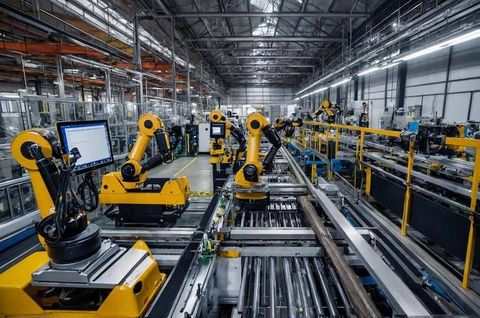
Actuator production facilities may use robotic handling, CNC machining centres, automated component inspection, and controlled assembly stations.
Automated production technologies support repeatable component manufacturing and help manufacturers coordinate multiple production stages.
Global Linear Actuator Manufacturers and Suppliers
The international linear actuator industry includes specialized motion control manufacturers, industrial automation companies, and mechanical component suppliers.
Recognized companies operating in this industry include:
LINAK: Danish manufacturer of electric linear actuators, lifting columns, control systems, and motion solutions.
Thomson Industries: Supplier of linear motion products, electromechanical actuators, and precision motion components.
Parker Hannifin: Industrial technology manufacturer supplying hydraulic, pneumatic, and electromechanical motion products.
Tolomatic: Manufacturer of electric linear actuators, rodless actuators, and linear motion systems.
Festo: Industrial automation company providing pneumatic and electric actuator technologies.
SMC Corporation: Japanese manufacturer of pneumatic equipment, automation components, and actuator systems.
Bosch Rexroth: Industrial technology company supplying linear motion, hydraulic, and automation equipment.
SKF: Engineering company supplying bearings, linear motion products, and mechanical components.
TiMOTION: Manufacturer of electric linear actuators, lifting columns, and control systems.
IAI Corporation: Japanese manufacturer specializing in industrial robots and electric actuator systems.
These companies operate across different product categories and application segments. Their equipment portfolios vary according to load capacity, actuator construction, drive technology, control arrangements, and industrial requirements.
Industrial Applications of Linear Actuators
Linear actuators support a wide range of industrial and commercial operations.
Automotive manufacturing: Used in assembly fixtures, positioning equipment, robotic production systems, adjustable platforms, and automated handling machinery.
Medical equipment: Integrated into hospital beds, examination tables, patient positioning systems, and selected diagnostic equipment.
Industrial automation: Used for robotic movement, machine positioning, component transfer, automated assembly, and production-line adjustment.
Packaging machinery: Supports filling equipment, cutting systems, sealing mechanisms, product sorting, and material positioning.
Agricultural equipment: Used in adjustable implements, equipment positioning, vehicle attachments, and automated agricultural machinery.
Renewable energy: Incorporated into solar tracking systems, panel positioning equipment, and selected wind energy mechanisms.
Aerospace engineering: Used in specialized positioning, equipment adjustment, and control mechanisms where engineering specifications and environmental requirements are particularly important.
Industry Developments and Trends During 2024–2026
Linear actuator manufacturing continues to evolve through improvements in electric drive technology, automation, material engineering, and digital controls.
Important developments include:
Electromechanical technology: Increased engineering attention toward electric actuators for applications requiring programmable movement and position feedback.
Industrial robotics: Growing integration of linear motion systems with robotic equipment and automated production cells.
Compact actuator designs: Development of smaller assemblies with integrated motors, controllers, and feedback components.
Energy management: Greater attention to efficient motor systems and reduced unnecessary energy consumption.
Smart manufacturing: Integration of sensors, industrial communication, diagnostic systems, and predictive maintenance technologies.
Customized actuator manufacturing: Greater availability of application-specific stroke lengths, mounting configurations, load capacities, and control arrangements.
Hydraulic and pneumatic technologies remain important where their force, operating characteristics, or existing industrial infrastructure suit the application.
Regulations, Quality Standards, and Industrial Safety
Linear actuator manufacturers and industrial users must consider applicable machinery safety, electrical safety, and product requirements.
ISO 9001 provides a quality management framework that can support manufacturing consistency, inspection procedures, and production documentation. ISO 14001 addresses environmental management practices within manufacturing facilities.
For actuator systems incorporated into machinery, applicable machinery safety requirements and relevant electrical standards should be considered according to the equipment design and installation environment.
Important safety considerations include overload protection, emergency stopping, mechanical guarding, electrical insulation, secure mounting, and protection against unexpected movement.
For hydraulic and pneumatic equipment, appropriate pressure ratings, hose connections, seals, and fluid or air management procedures are also important.
Important Factors When Evaluating Linear Actuators
Selecting an actuator requires understanding its mechanical, electrical, environmental, and operational requirements.
Load capacity: Determine the required pushing, pulling, lifting, or holding force. Dynamic and static loads should be evaluated separately.
Stroke length: Establish the required linear travel distance and available installation space.
Operating speed: Consider movement speed, acceleration, duty cycle, and frequency of operation.
Positioning accuracy: Evaluate whether basic end-position movement or precise intermediate positioning is required.
Power supply: Check voltage, motor specifications, control interfaces, and compatibility with existing automation equipment.
Environmental protection: Consider dust, moisture, temperature, vibration, corrosion, and relevant ingress protection requirements.
Manufacturer and supplier capabilities: Review technical documentation, customization options, testing procedures, spare-parts availability, warranty conditions, and engineering support.
Frequently Asked Questions
What is linear actuator manufacturing?
Linear actuator manufacturing involves producing mechanical and electromechanical devices that generate controlled straight-line movement. It includes component machining, motor integration, mechanical assembly, electronic control integration, and performance testing.
What are the main types of linear actuators?
The main categories include electric, hydraulic, pneumatic, and mechanical actuators. Specialized designs include telescopic and rodless actuators, which accommodate different installation and movement requirements.
Which materials are used in linear actuator manufacturing?
Common materials include aluminium alloys, stainless steel, carbon steel, engineering plastics, and specialized sealing compounds. Material selection depends on load requirements, corrosion resistance, operating conditions, and component design.
Who are the major global linear actuator manufacturers?
Recognized manufacturers and suppliers include LINAK, Thomson Industries, Parker Hannifin, Tolomatic, Festo, SMC Corporation, Bosch Rexroth, SKF, TiMOTION, and IAI Corporation.
Where are industrial linear actuators commonly used?
They are used in automotive manufacturing, industrial automation, robotics, medical equipment, packaging machinery, agricultural machinery, renewable energy systems, and specialized engineering applications.
Conclusion
Linear actuators are important motion control components used in industrial machinery, automated manufacturing, medical equipment, automotive systems, and engineering applications. Their manufacturing involves material selection, precision machining, motor production, mechanical assembly, electronic integration, and performance testing. Electric, hydraulic, pneumatic, and mechanical technologies address different movement and load requirements. Understanding actuator specifications, manufacturing processes, industrial standards, and global supplier capabilities provides a foundation for evaluating linear motion equipment and its applications.