Factory Automation Explained: Industrial Automation Systems, Technologies, Robotics, Global Manufacturers, Suppliers and Manufacturing Applications
Factory automation refers to the use of industrial machinery, control systems, robotics, and digital technologies to perform manufacturing operations with reduced manual intervention. Factory automation systems are used in automotive production, electronics manufacturing, food processing, pharmaceuticals, packaging, metalworking, and other industrial sectors.
Industrial automation has developed from basic mechanical production equipment into integrated systems involving programmable logic controllers, industrial robots, sensors, machine vision, and manufacturing software. Modern factories combine automated machinery with data monitoring and communication technologies to coordinate multiple production operations. Automation requirements vary according to factory size, production volume, product complexity, safety requirements, and operational objectives.
This guide explains factory automation systems, industrial technologies, robotics, equipment categories, manufacturing processes, global manufacturers, suppliers, and industrial applications. It also examines automation software, smart factory developments, international standards, commercial equipment considerations, and important factors involved in evaluating industrial automation solutions.
Understanding Factory Automation Systems
Factory automation is the application of control technologies and automated equipment to manage manufacturing operations. It involves machinery, electrical systems, software, sensors, and communication networks that coordinate industrial production activities.
Traditional manufacturing often depends on manual operations and individual machine controls. Automated factories integrate equipment and control systems to perform repetitive tasks, monitor production conditions, and coordinate material movement.
Factory automation can operate at different levels, ranging from a single automated machine to a fully integrated production facility. The level of automation depends on production requirements, technical complexity, available infrastructure, and investment considerations.
Main Types of Factory Automation
Industrial automation systems are generally classified according to production flexibility, operating methods, and manufacturing requirements.
Fixed Automation Systems
Fixed automation uses specialized equipment designed to perform repetitive manufacturing operations in a predetermined sequence.
These systems are commonly used in high-volume production environments where product designs and manufacturing processes remain relatively stable.
Examples include automated assembly lines, transfer machines, dedicated packaging equipment, and high-speed bottling systems.
Their main characteristics include:
High-volume repetitive production.
Specialized machinery and equipment.
Limited flexibility for product changes.
Coordinated mechanical and electrical operations.
Consistent manufacturing sequences.
Programmable Automation Systems
Programmable automation uses industrial controllers and software to operate machinery according to predefined instructions. Production sequences can be modified by changing machine programmes or control configurations.
This approach is commonly used in batch manufacturing, metal fabrication, industrial processing, and machinery production.
Computer numerical control (CNC) machines are an important example because their operating instructions can be modified for different machining operations and component designs.
Flexible Automation Systems
Flexible automation allows manufacturing equipment to handle different products or production requirements with relatively limited changeover work.
These systems commonly integrate programmable controllers, robotic equipment, automated material handling, and computer-controlled machinery.
Flexible manufacturing systems are particularly relevant to industries that produce different product models or customized components within the same facility.
Integrated Automation Systems
Integrated automation connects multiple machines, production lines, software platforms, and operational departments.
These systems may coordinate manufacturing execution, material handling, quality inspection, inventory monitoring, and production scheduling.
Integrated automation is an important component of smart manufacturing and Industry 4.0 environments.
Comparison of Industrial Automation Systems
| Automation type | Main characteristics | Common applications |
|---|---|---|
| Fixed automation | Dedicated repetitive machinery | Mass production and bottling |
| Programmable automation | Software-controlled production sequences | CNC machining and batch production |
| Flexible automation | Multiple product configurations | Automotive and component manufacturing |
| Integrated automation | Connected machines and production systems | Smart factories and complex manufacturing |
Major Technologies Used in Factory Automation
Factory automation combines several industrial technologies to control machinery, production processes, and material movement.
Programmable Logic Controllers
Programmable logic controllers (PLCs) are industrial computers used to control machines and production equipment. They receive information from sensors and switches, process programmed instructions, and activate connected devices.
PLCs are widely used in conveyor systems, packaging machinery, robotic cells, assembly lines, and industrial processing equipment.
Supervisory Control and Data Acquisition Systems
Supervisory Control and Data Acquisition (SCADA) systems allow operators to monitor industrial processes through centralized interfaces.
They collect operational information from controllers, sensors, and connected equipment. SCADA applications may include temperature monitoring, production status reporting, alarm management, and process visualization.
Industrial Robotics
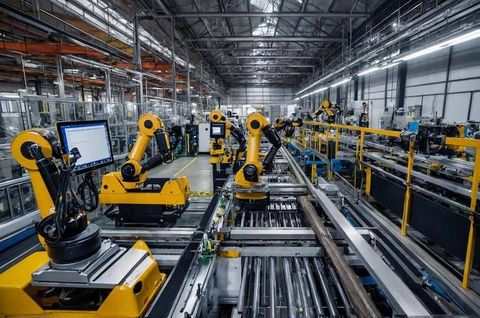
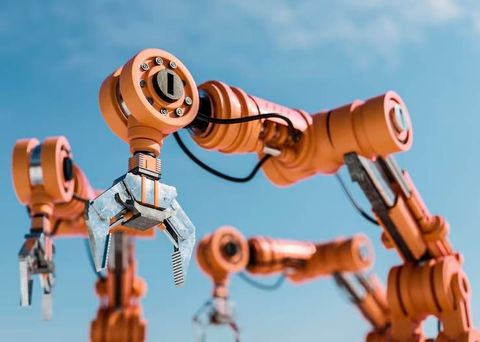
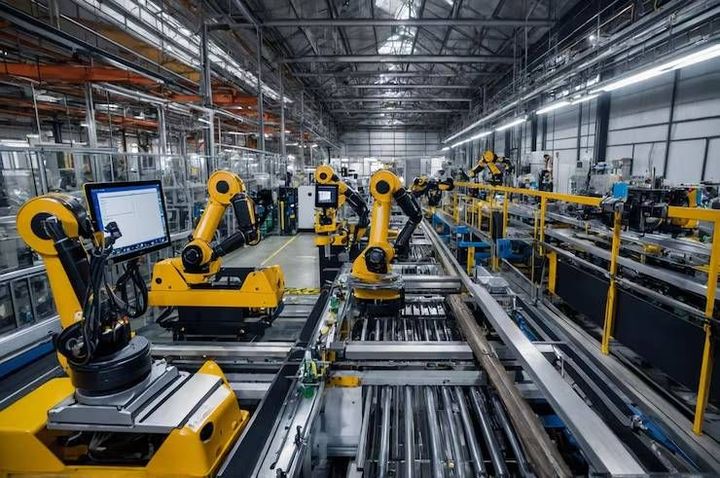
Industrial robots perform tasks requiring repeated movements, controlled positioning, and coordinated mechanical operations.
Common robotic configurations include:
Articulated robots: Multi-jointed robots used for welding, assembly, painting, and material handling.
SCARA robots: Systems commonly used for high-speed assembly and component positioning.
Cartesian robots: Linear-motion systems used for pick-and-place and machine loading.
Delta robots: Parallel robotic systems used for rapid picking, sorting, and packaging.
Collaborative robots: Robots designed to operate in applications where people and automated equipment share working spaces under appropriate safety controls.
Machine Vision and Industrial Sensors
Machine vision systems use cameras, lighting, image processing, and software to inspect products and identify manufacturing defects.
Industrial sensors measure conditions such as temperature, pressure, vibration, position, flow, and proximity. Their data supports machine control, process monitoring, and predictive maintenance activities.
Computer Numerical Control Machinery
CNC machinery uses programmed instructions to control cutting, drilling, milling, turning, and other manufacturing operations.
CNC systems are widely used in metalworking, automotive components, aerospace manufacturing, precision engineering, and industrial equipment production.
Factory Automation Manufacturing and Implementation Process
Implementing factory automation involves several connected engineering and production stages.
Production Assessment and Process Planning
Manufacturers first examine existing production operations, product specifications, material movement, equipment limitations, and production targets.
Engineers identify repetitive operations, process bottlenecks, quality requirements, and tasks that may benefit from automation.
Equipment Selection and System Design
Automation engineers identify suitable machinery, controllers, sensors, robotic systems, conveyors, and software platforms.
The design process considers machine dimensions, operating speed, load capacity, electrical requirements, communication protocols, and integration with existing equipment.
Installation and System Integration
Selected equipment is installed and connected to the factory's electrical, mechanical, and communication infrastructure.
PLC programming, robotic configuration, safety systems, and production software are integrated according to the operating requirements.
Testing and Commissioning
Before production begins, engineers conduct functional testing, safety verification, equipment calibration, and operating sequence checks.
Commissioning helps identify technical compatibility problems and confirms whether the integrated system operates according to its design specifications.
Production Monitoring and Maintenance
After commissioning, automated equipment requires regular inspection, software maintenance, calibration, and component replacement.
Condition monitoring and equipment performance data can help maintenance teams identify developing faults and plan maintenance activities.
Global Factory Automation Manufacturers and Suppliers
The industrial automation market includes manufacturers of controllers, robotics, motion systems, sensors, industrial software, and integrated production equipment.
Recognized companies operating in this sector include:
Siemens: Develops industrial automation controllers, PLCs, motion control equipment, industrial software, and digital manufacturing technologies.
ABB: Supplies industrial robotics, electrical automation equipment, drives, motors, and control technologies.
Rockwell Automation: Provides industrial control systems, automation software, PLC technologies, and manufacturing information solutions.
Schneider Electric: Develops industrial automation systems, programmable controllers, electrical distribution equipment, and industrial control platforms.
Mitsubishi Electric: Manufactures factory automation equipment, servo systems, PLCs, industrial robots, and CNC technologies.
Omron: Supplies industrial sensors, machine vision equipment, controllers, safety systems, and automation components.
FANUC: Specializes in industrial robots, CNC systems, and factory automation technologies.
Yaskawa Electric: Develops industrial robots, motion control equipment, servo drives, and automation systems.
KUKA: Supplies industrial robots, robotic production systems, and manufacturing automation solutions.
Bosch Rexroth: Provides drive and control technologies, industrial automation equipment, and manufacturing systems.
The supplier market also includes specialist engineering companies, system integrators, industrial software providers, robotics distributors, electrical component manufacturers, and automation installation contractors.
When evaluating factory automation manufacturers and suppliers, businesses generally examine equipment compatibility, technical specifications, communication protocols, engineering support, spare-parts availability, and system maintenance requirements.
Industry Developments and Trends During 2024–2026
Factory automation is evolving through developments in artificial intelligence, industrial connectivity, robotics, and digital manufacturing.
Industrial Internet of Things
The Industrial Internet of Things (IIoT) connects machines, sensors, controllers, and industrial software through communication networks.
Connected equipment can provide information about operating conditions, production output, energy consumption, and maintenance requirements.
Artificial Intelligence in Manufacturing
Artificial intelligence is increasingly being applied to industrial inspection, production planning, equipment monitoring, and predictive maintenance.
Machine learning systems can analyse historical and operational data to identify patterns associated with equipment performance and manufacturing quality.
Digital Twins and Smart Factories
Digital twins are virtual representations of physical machines, production lines, or industrial facilities. They can be used to simulate processes, examine equipment behaviour, and evaluate production changes.
Smart factories combine automation, connected equipment, data analytics, and integrated manufacturing systems to coordinate production operations.
Collaborative Robotics
Collaborative robots are being incorporated into applications such as machine tending, assembly, packaging, and material handling.
Their deployment requires appropriate risk assessment, workspace design, safety controls, and integration with surrounding machinery.
Regulations and International Standards for Factory Automation
Industrial automation systems must consider machinery safety, electrical protection, workplace requirements, and operational risk management.
Important international standards include:
ISO 10218: Safety requirements for industrial robots and robotic systems.
ISO/TS 15066: Guidance concerning collaborative robot applications.
IEC 60204-1: Electrical equipment requirements for machinery.
IEC 61131: Standards relating to programmable controllers.
ISO 13849: Safety-related parts of machinery control systems.
IEC 62443: Cybersecurity standards for industrial automation and control systems.
In India, factories must also comply with applicable occupational safety, electrical safety, and industrial regulatory requirements. The Occupational Safety, Health and Working Conditions Code, 2020, and relevant rules and notifications form part of the national workplace safety framework, subject to their applicable commencement and implementation provisions.
Manufacturers and automation integrators should distinguish between mandatory legal requirements, applicable technical standards, and voluntary industry practices.
Important Factors When Evaluating Factory Automation Equipment
Industrial automation projects involve technical, operational, and commercial considerations.
Production requirements: Examine production volume, operating cycles, product variations, and expected equipment utilization.
Equipment compatibility: Confirm that controllers, sensors, robots, drives, and communication systems can operate together.
Integration requirements: Assess whether new automation equipment can connect with existing machinery and manufacturing software.
Safety and compliance: Review machine guarding, emergency stops, access controls, risk assessments, and applicable safety standards.
Maintenance and technical support: Consider spare-parts availability, software updates, calibration requirements, and maintenance arrangements.
Commercial considerations: Evaluate equipment quotations, engineering expenses, installation, commissioning, training, operating expenses, and long-term maintenance requirements.
Cybersecurity: Examine network segmentation, access permissions, software updates, and protection of industrial control systems.
Manufacturing Applications of Factory Automation
Factory automation is used across several industrial sectors.
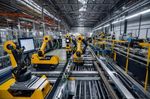
Automotive manufacturing: Robotic welding, vehicle assembly, painting, and automated inspection.
Electronics manufacturing: Circuit board assembly, component placement, soldering, and quality inspection.
Food processing: Automated filling, mixing, sorting, packaging, and temperature control.
Pharmaceutical manufacturing: Controlled production environments, automated material handling, and process monitoring.
Metal fabrication: CNC machining, robotic welding, cutting, and material handling.
Plastic manufacturing: Injection moulding, automated part removal, quality inspection, and packaging.
Warehouse operations: Conveyor systems, automated storage, sorting equipment, and robotic material movement.
The level of automation varies according to production requirements, equipment investment, product characteristics, and industry regulations.
Frequently Asked Questions
What is factory automation used for?
Factory automation is used to control and coordinate manufacturing operations through machinery, robotics, industrial controllers, and software. Applications include assembly, packaging, material handling, machining, inspection, and production monitoring.
What are the main types of industrial automation systems?
The main categories are fixed automation, programmable automation, flexible automation, and integrated automation. Each category supports different production volumes, product variations, and manufacturing requirements.
Which companies manufacture industrial automation equipment?
Recognized manufacturers include Siemens, ABB, Rockwell Automation, Schneider Electric, Mitsubishi Electric, Omron, FANUC, Yaskawa, KUKA, and Bosch Rexroth. Their product portfolios include controllers, robotics, sensors, drives, and industrial software.
What is the difference between PLC and SCADA systems?
A PLC directly controls industrial machinery by processing inputs and executing programmed instructions. SCADA systems provide supervisory monitoring, visualization, data collection, and operational reporting across industrial processes.
What factors influence factory automation system requirements?
Important factors include production capacity, machine compatibility, equipment safety, integration complexity, software requirements, maintenance arrangements, and operating expenses. The appropriate system depends on the manufacturing process and facility requirements.
Conclusion
Factory automation combines industrial machinery, robotics, control systems, sensors, and software to coordinate modern manufacturing operations. Fixed, programmable, flexible, and integrated automation systems support different production environments across automotive, electronics, food processing, pharmaceuticals, and metalworking. Industrial connectivity, artificial intelligence, digital twins, and collaborative robotics continue to influence manufacturing technologies. Understanding equipment categories, manufacturers, suppliers, safety standards, and integration requirements provides a useful foundation for evaluating industrial automation systems.